
 Quartz Watch
 Mechanical Watch
 Digital Watch


A Skeleton-Look Watch Line for an Asheville Accessories Boutique
Dana Kessler runs Wren & Salt, a small accessories and home goods shop in Asheville, North Carolina, mostly stocked with jewelry from local makers and a handful of imported gift lines. She wanted to add a watch to the shop's own house label -- something that photographed well for the store's Instagram and felt like a step up from what she was already carrying. The reference images she sent KODA were all the same kind of picture: an exposed, gear-heavy dial with a visible balance wheel spinning at the center, the look most people associate with a skeleton tourbillon. Her target was 120 units, a retail price around seventy dollars, and a wholesale cost that left her enough margin to make the math work at that volume.
The number that came back from KODA's quote didn't match what she had pictured. A true automatic skeleton movement, decorated and assembled by hand, runs three to four times what a standard automatic costs, and the factories that produce it at any real quality don't take orders under roughly five hundred units -- the tooling and hand-finishing labor don't make sense to set up for less. Dana pushed back hard on the first call, arguing that removing metal from a dial couldn't possibly justify that kind of markup. It's a common enough misunderstanding that KODA's production lead has a name for it internally: people price the missing material, not the machining precision and hand-assembly time it takes to make the missing material look intentional.
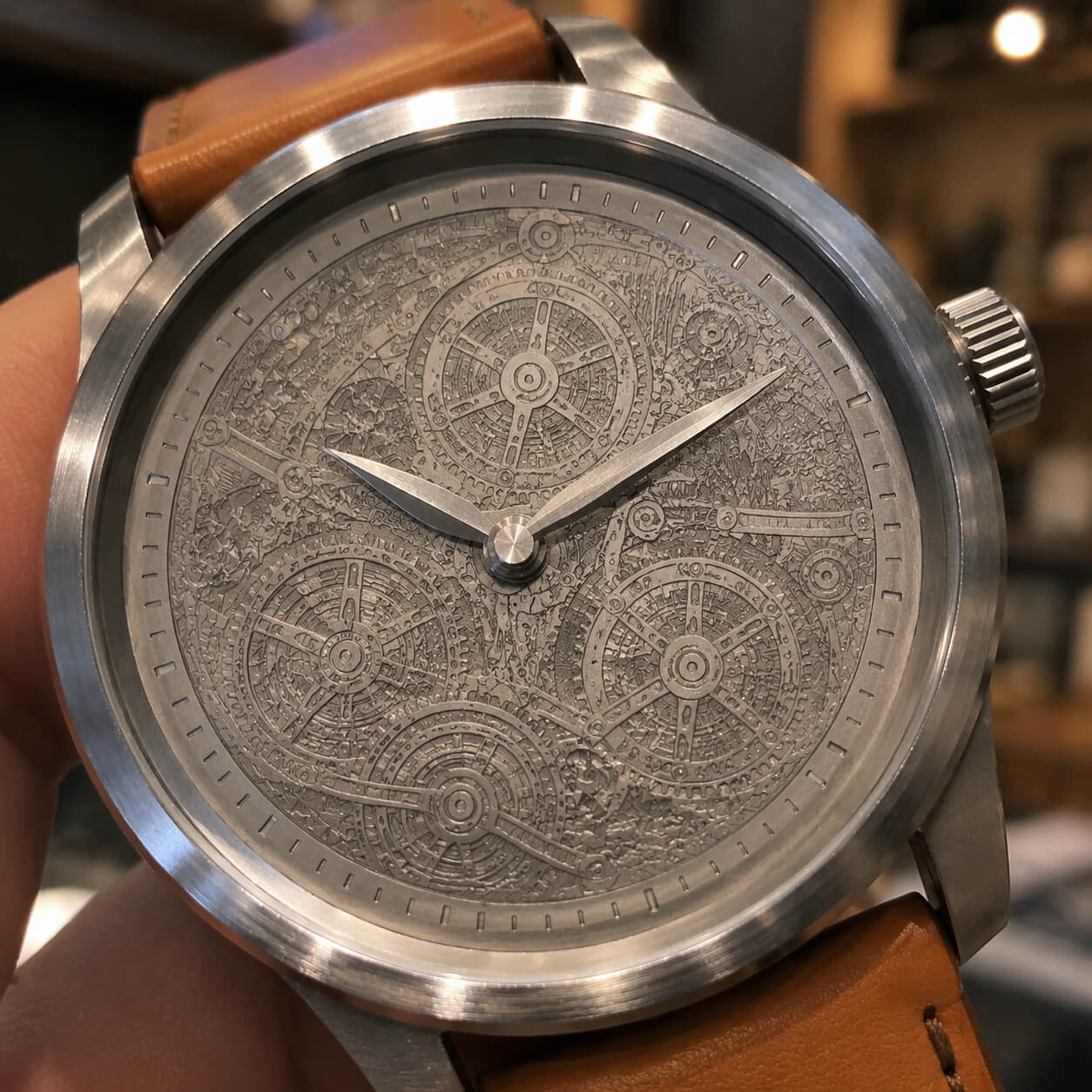
There was a real moment of hesitation on KODA's side before the second call. The easier path would have been to quote closer to what Dana wanted and let the sampling stage sort out the gap later, the way some factories do to keep a deal moving. The account manager flagged that this would only move the disappointment further down the timeline and make it worse, not smaller, so the second call led with the honest number and an alternative instead: a printed and laser-etched dial that recreates the gear-and-balance-wheel look on the surface of a standard quartz movement, at roughly a third of the true-skeleton cost and well inside her 120-unit range.
Dana wasn't sold from the renderings. A printed dial photographed flat next to a spinning skeleton movement looks like exactly what it is -- a picture of gears instead of real ones -- and she said as much. KODA sent two physical samples instead of a third render. The etched depth on the dial catches light differently than a flat print does, and when Dana turned the watch under the shop's overhead lighting, the shadow lines moved the way a real open dial's would. She later said that was the moment it stopped feeling like a compromise; it was the object in her hand that made the case, not the explanation on the phone.
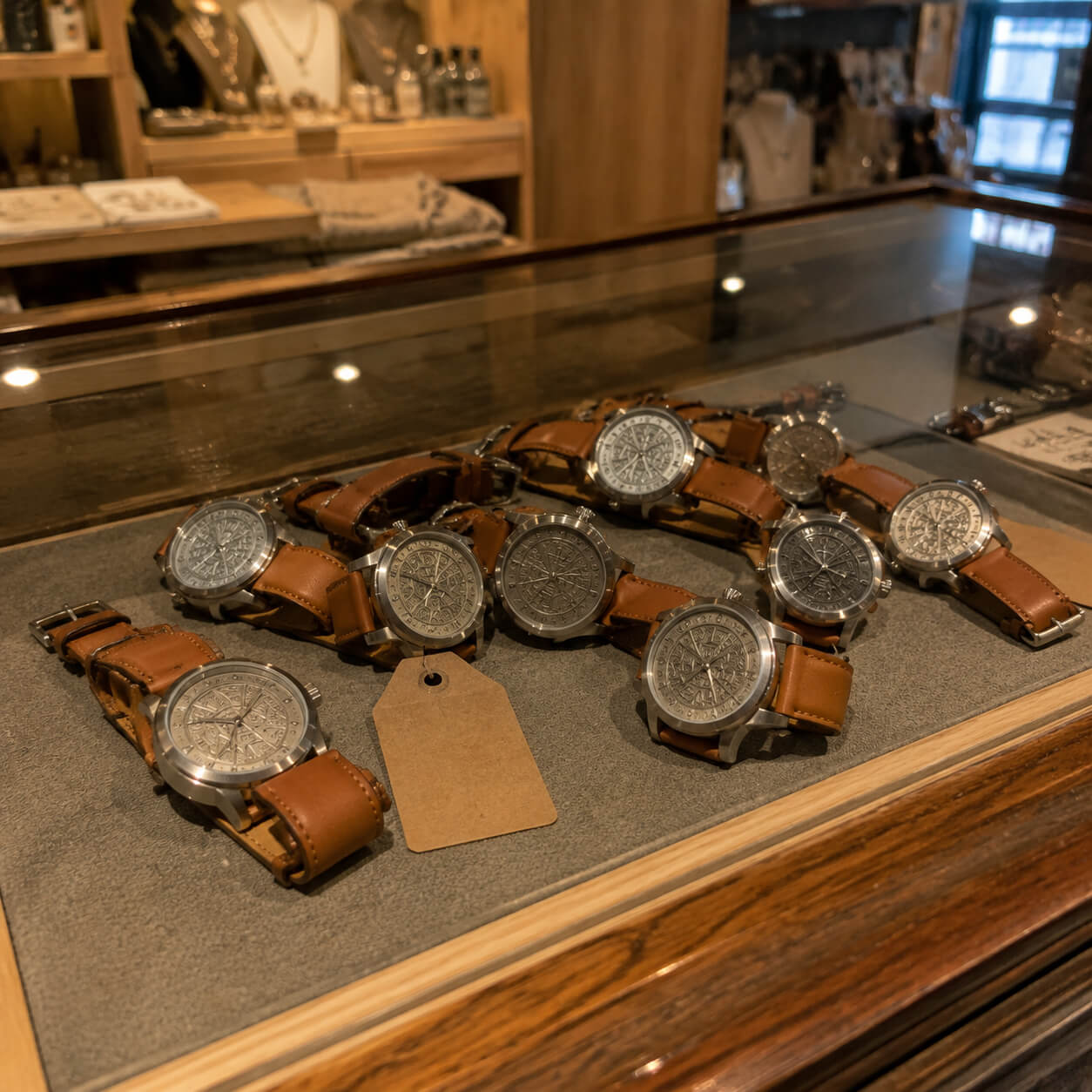
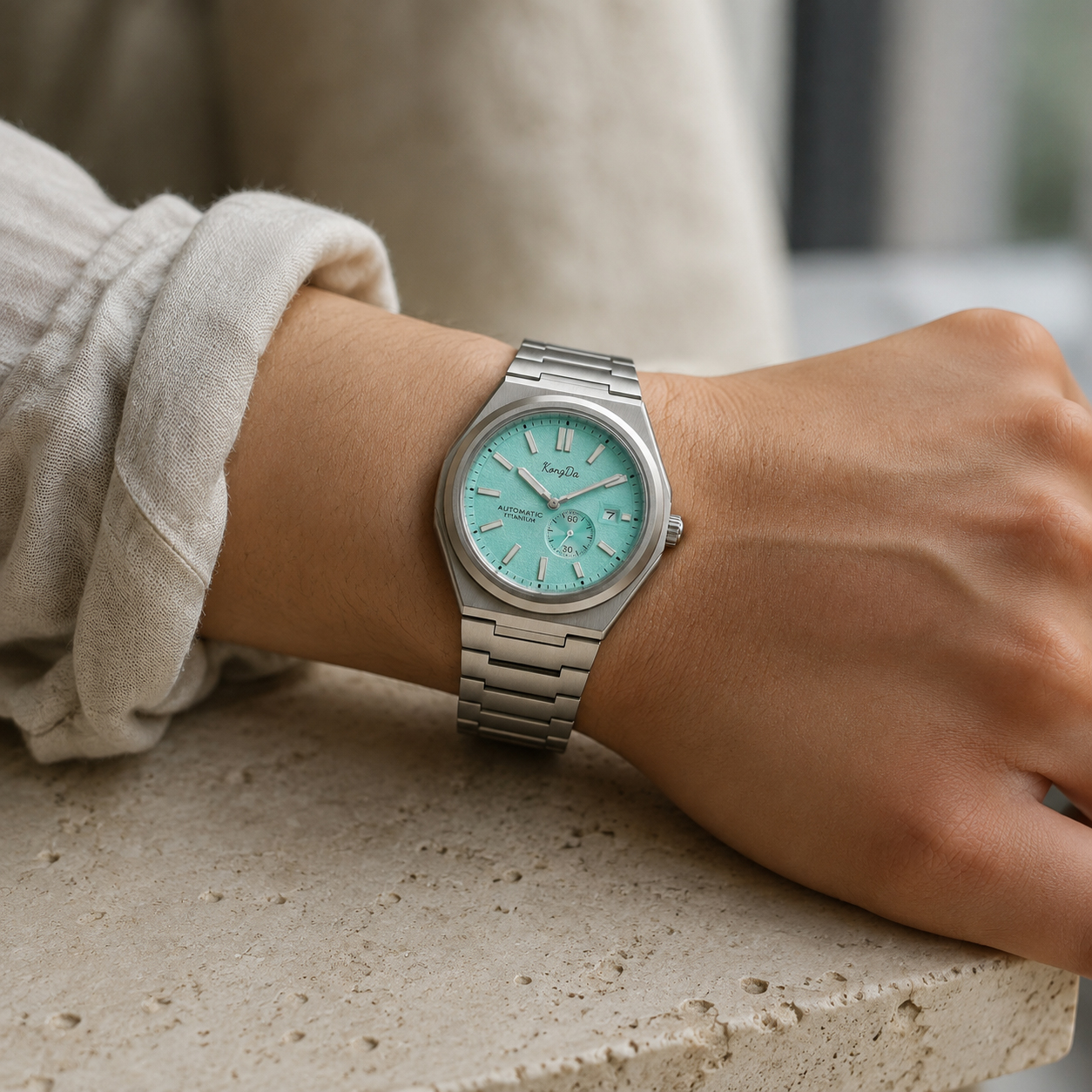
The order for 120 units of the etched-dial version went into production in early June, cased in a brushed steel 38mm case with a tan leather strap to match the shop's other accessories. Dana priced them at sixty-eight dollars and put the first dozen in the store's front window with a small handwritten card explaining the dial detail, which turned out to do more selling than the watch itself needed. The batch sold through in a little over five weeks, and by late July she had placed a second order for 300 units, this time asking whether the same etched technique could be done in a darker gunmetal finish for fall.